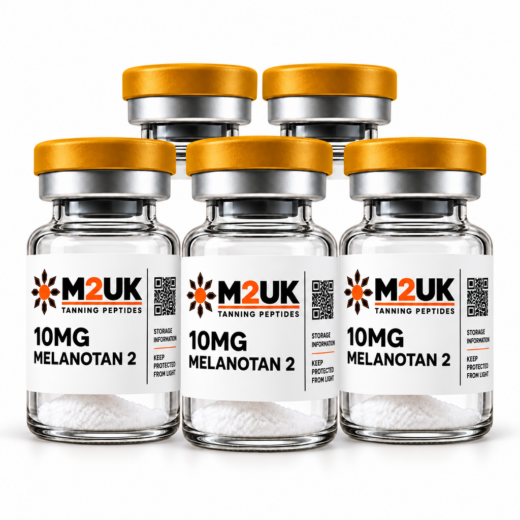
Melanotan 2: information, safety & common questions
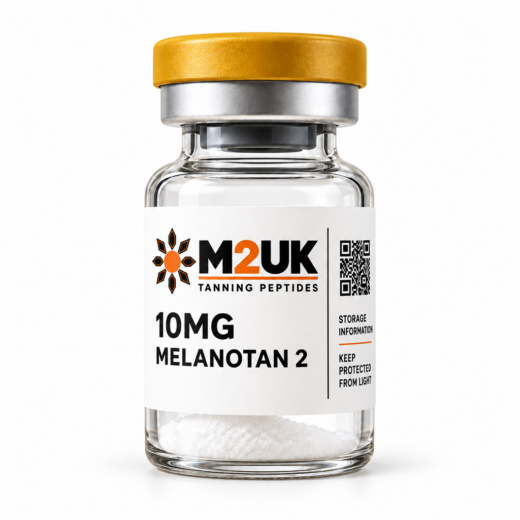
Melanotan 2, also written as Melanotan II, is a synthetic peptide associated with increased melanin production. Melanin is the pigment that gives skin its colour. A change in pigmentation does not establish that a product is safe, approved or able to protect your skin from sunlight.
01
What UK readers should know
For UK readers, it is important to distinguish research-use products from medicines intended for human use. Products such as Melanotan II are commonly discussed in research contexts, but they should not be presented, supplied or used as medicines or for human consumption unless appropriately authorised.
Products supplied for research purposes are intended solely for laboratory or other legitimate research applications and are not intended for human consumption. As with any research-use material, appropriate handling, storage and laboratory procedures should be followed, and the product should not be used as a substitute for an authorised medicine.
Darker-looking skin is not a substitute for protection from ultraviolet radiation. The NHS recommends shade, suitable clothing and sunscreen with at least SPF 30 and four-star UVA protection.
In the UK, take particular care between 11am and 3pm from March to October. Reapply sunscreen as directed and do not use it as a reason to stay in the sun longer.
Melanotan 2 has been researched for its interaction with melanocortin receptors, which are involved in a range of biological processes. Its activity at these receptors is one of the main areas of scientific interest surrounding the compound.
Are there any reported side effects?
Research and reports involving Melanotan 2 have described some relatively common effects, including nausea, headache, flushing or facial redness, and changes in appetite. The effects reported can vary between individuals and may depend on factors such as the amount used.
As Melanotan 2 is a research compound rather than an authorised medicine, there is limited clinical information available about its effects and longer-term use. Research-use products are intended for scientific investigation and are not intended for human consumption.
Why can Melanotan 2 affect skin pigmentation?
Melanotan 2 has been researched for its ability to influence melanocortin pathways involved in melanogenesis, the biological process responsible for producing melanin. Increased melanin production can result in darker skin pigmentation, which is the basis for the interest in Melanotan 2 within pigmentation and tanning research.
This response is linked to the body's natural pigment-producing processes rather than simply colouring the surface of the skin. Research into Melanotan 2 therefore provides an opportunity to study the relationship between melanocortin signalling, melanin production and changes in pigmentation.
General information, not personal medical advice. Sources checked on : MHRA and NHS guidance linked above, and the TGA's melanotan safety information.